
Blockchain and the Future of National Systems
Rights Reserved By OWOI-26
Blockchain for Every Country
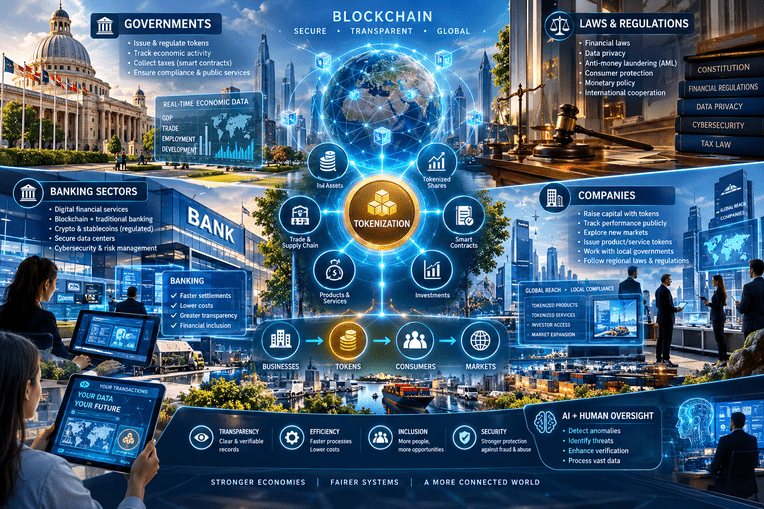
Every country could look into building it's blockchain-based systems to handle secure record-keeping, trade, public-sector information and economic reporting. These systems might offer a trustworthy way to track key economic data, such as GDP figures. This would allow for comparisons between different regions and help spot where more efficiency, investment or development is needed.
With the protections in place blockchain technology could also be used alongside current banking and digital payment networks. As financial institutions and electronic money services keep evolving adding blockchain solutions may lead to quicker verification, better transparency and lower administrative costs, in some cases.
Any such system must respect laws uphold monetary control protect privacy ensure cybersecurity maintain financial stability and support the role of central banks.
Tokenization
A tokenization system built on the blockchain infrastructure of each region could become an advanced tool for companies to explore new opportunities.
It could make it easier to publicly track certain aspects of a company’s growth and performance, while also making financial and business information easier for ordinary people to understand. With the right regulations and safeguards, this could also create new ways for people to participate in or invest in businesses. Multinational companies could potentially work with local governments in the regions where they operate, while following the laws and regulations of each jurisdiction.
Companies could also consider creating new digital tokens for products or services that it launches in the marketplace, and appropriate exchanges or swaps of such tokens as necessary. This would create a more open connection for companies, products, consumer markets, and regional economic structures while allowing individual countries to maintain their own financial and legal frameworks.
Banking Sectors
Banking systems in themselves are already becoming more digital with the growth of internet-based financial services.
However, banking institutions and secure data centers would still be required for record-keeping, financial data security, cyber-security, and other essential economic operations. With the inclusion of state regulation, banking organizations could use blockchain technology to operate with cryptocurrencies issued within the framework of domestic and international transactions.
This would allow financial institutions to co-exist with the blockchain network as it would not require the creation of an alternative financial system. Such a system would require the adherence to state regulations, financial laws, data privacy rules, and monetary policies.
Transparency and Tax Security
A token-based system when designed well can offer transparency in financial transactions than some traditional forms of physical cash. Since transactions are recorded digitally and verified through a blockchain network it becomes harder to hide transactions or tamper with financial records. Strong identity checks, cybersecurity protections and regulatory controls would still be needed to lower risks, like money laundering, fraud and other forms of abuse. Governments might be able to issue or regulate tokens based on the size, operations and needs of different companies. This could lead to detailed and clear records of economic activity.
Tax collection could also be built into digital transactions, where the law allows, Taxes could be. Collected at the time of the transaction. This would reduce work increase, transparency and make tax reporting easier to track. It would also give governments a better view of economic activities.
Looking Ahead
AI could also be leveraged to support these systems in the long term, by helping to detect anomalies, identify threats, enhance verification systems and process vast data. As financial technology continues to grow in connectivity, we will need secure banking and financial services that maintain the consistent trust, stability, and surety of transactions.
No AI or technological entity will fully replace this-security, cybersecurity, oversight, human involvement, privacy, governance and trust will be more critical than ever, but there are a number of avenues to explore as technology advances and we are happy to continue the conversation.